October 2025
In the late 19th-Century, horror novels were all the rage. It was a way to explore repressed desires, scientific anxiety and the supernatural. Here are our picks as the best Victorian Horror and their authors.
Frankenstein was written in 1818 by Mary Shelley. It tells the story of Victor Frankenstein, a scientist who creates life. Instead of being excited, he is horrified by the monster he created and rejects it. Following Victor, the story addresses the consequences for breaking the laws of nature.
Mary Shelley wrote Frankenstein because of a writing competition with her husband, Jane Clairmont, Lord Byron, and John Polidori. Her husband, Percy Shelley, was also a writer, and they would meet in secret at her mother’s grave to avoid the ire of Mary’s father. Mary’s mother, who had died only 11 days after giving birth to her, was an early feminist known for her “A Vindication of the Rights of Woman”.
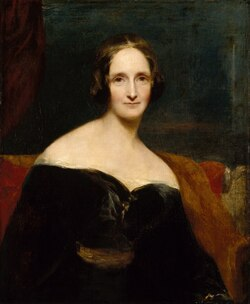
Mary Shelly, Image from https://en.wikipedia.org/wiki/Mary_Shelley
Dracula was written in 1897 by Bram Stoker and initially follows the story of Johnathan Harker, who becomes entangled with Count Dracula. Through a series of letters, diary entries, and newspaper articles, the novel tells a riveting tale of vampires and the hunt for them.
Dracula has had a massive impact on the depiction of modern vampires. Having no reflection, needing to be invited in, and needing to sleep on dirt from their homeland are all inventions by Stoker. Stoker draws from other vampire stories as well as folklore, such as John Polidori’s The Vampyre, which created the idea of elegant, wealthy vampires. Stoker likely picked the name Dracula as it means “devil” in Wallachian.
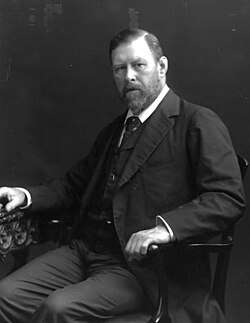
Bram Stoker image from https://en.wikipedia.org/wiki/Bram_Stoker
Published in 1890, The Picture of Dorian Gray was written by Oscar Wilde, and the tragic novella tells the story of Dorian Gray. A handsome but selfish young man whose fascination with vice and sin led him down a treacherous path.
According to Wilde, it was a portrait sitting that inspired him. He had commented that it would be nice for the portrait to age instead of him, instantly giving him the idea for The Picture of Dorian Gray. The story was met with much backlash when it was first published, partly due to allusions to homosexuality and partly due to Wilde’s personal life. This was despite the publisher removing aspects deemed indecent. The longer 1891 novel further removed references to homosexuality.
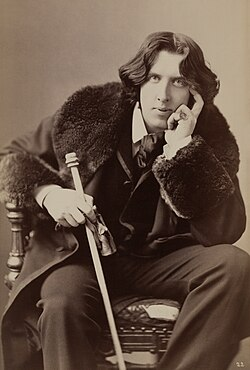
Oscar Wilde, image from https://en.wikipedia.org/wiki/Oscar_Wilde
The Strange Case of Dr. Jekyll and Mr. Hyde was written in 1886 by Robert Louise Stevenson.
The story follows London-Based legal practitioner, Gabriel John Utterson, who investigates a series of strange occurrences between his old friend, Dr. Henry Jekyll, and a murderous criminal named Edward Hyde.
According to several biographers, Stevenson burned the first draft of his novella, although they disagree on exactly how this happened. He may have thrown it into the fire after receiving criticism from his wife, forcing him to start again. The book became a hit and influenced later works, including the creation of the Hulk, whose transformation was directly inspired by Dr. Jekyll & Mr. Hyde.
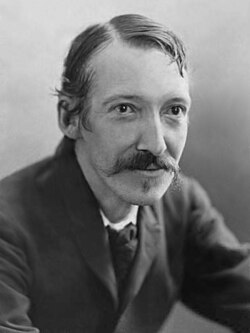
Robert Louis Stevenson, Image from https://en.wikipedia.org/wiki/Robert_Louis_Stevenson
The Woman in White was written by Wilkie Collins and was published in 1860. The story follows
Walter Hartright, a young teacher, encounters and gives direction to a mysterious and distressed woman dressed entirely in white while lost in London. This encounter entangled him in a villainous plot of conspiracy.
The treatment of women and the institution of marriage are themes throughout much of Collin’s work. His dislike of marriage translates into his personal life. Collin never married, although he had relationships with two women. He lived with Caroline Graves for around 30 years, taking on her daughter as his own. He started a relationship with Martha Rudd around the same time Caroline married another, though there seems to be no bad blood, as he went to the wedding. Caroline would return after two years, and he would split his time between both homes.
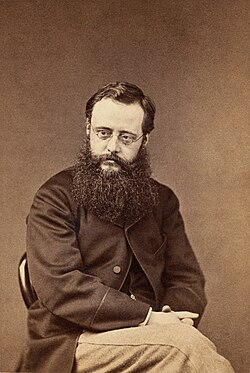
Wilkie Collins, Image from https://en.wikipedia.org/wiki/Wilkie_Collins
Carmilla is a Gothic horror novella by J Sheridan Le Fanu, about a young woman in a secluded Austrian castle, who forms a relationship with the mysterious and beautiful Carmilla.
Carmilla was written 25 years before Dracula and likely influenced aspects of the novel. There are similarities, such as the symptoms victims display and both vampires pretending to descend from nobles, which they are revealed to be. Carmilla is seen as a prototype for the Lesbian vampire trope, as she builds an emotional relationship with her victims.
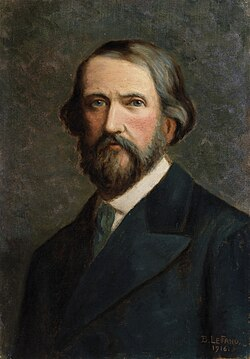
The Raven is a poem famously written by Edgan Allen Poe. In the poem, the unnamed speaker is mourning the loss of his love, and struggles between wanting to forget and remember her.
The Raven is noted for its musicality, stylized language, and supernatural atmosphere. Poe’s death was as mysterious as his writings. On October 3, 1849, Poe was found semiconscious in Baltimore. Despite staying alive for four more days, he was never coherent long enough to explain what happened to him. The doctor claimed that his last days were spent talking to unseen figures. Theories run rampant on why he died.
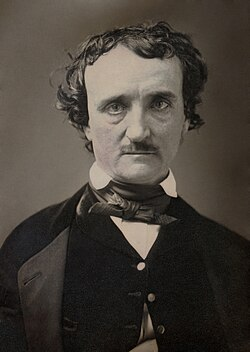
Edgar Allan Poe, image from https://en.wikipedia.org/wiki/Edgar_Allan_Poe