
| In March 2020, the World Health Organization declared COVID-19 a global health emergency, and the world went into quarantine. But COVID-19 wouldn’t be the first pandemic that this house saw. During the time the Roedde’s lived in Vancouver, there were many epidemics that haunted the western world, but we will deep dive into 5: The Russian Flu, Cholera, Typhus, Measles and the Spanish Flu. |
| Let’s talk about Miasma and Germ theory for a moment. Miasma Theory holds that diseases were caused by Miasma, or Bad Air. During the Victorian Era. Some academics suggested that Miasma caused other conditions, for example, becoming obese by inhaling the odour of food. As a result, it was believed that eliminating odour made the clean-up of waste a high priority for cities. Germ Theory is how we explain the causes of infectious diseases now. But it only started to be accepted in the 1880s. Germ Theory states that microorganisms known as pathogens or germs can cause disease. It’s the growth and reproduction within the host that causes disease. The idea of germ theory was first proposed by Girolamo Francastoro in 1546, and expanded upon by Marcus von Plenciz in 1762. It took almost 120 years for Europe to start accepting Germ theory over Miasma theory! By the early 19th century, the first vaccine, the smallpox vaccination, was commonplace in Europe, though doctors did not know how it worked or how to extend the principle to other diseases. |
The Russian Flu
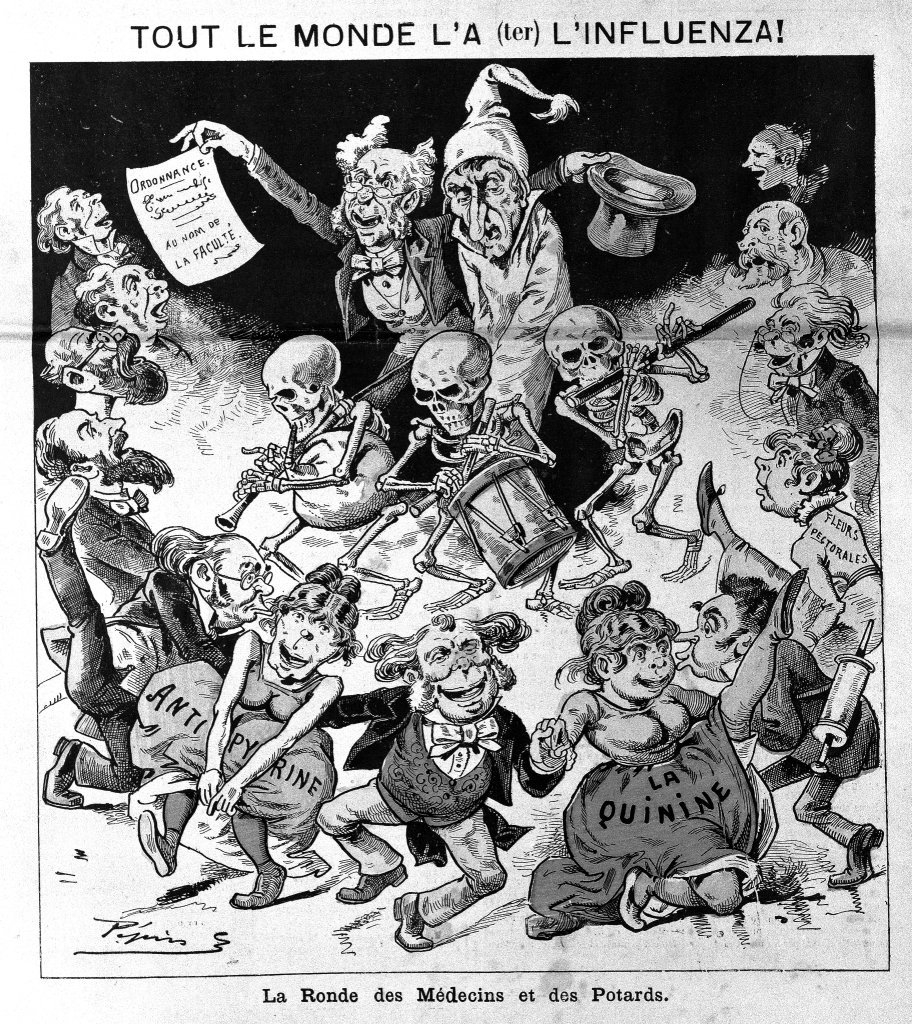
| The Russian Flu is considered the first documented worldwide epidemic. It rode on the new railroad and shipping paths that connected the globe, reaching Canada in 1898. It killed one million people out of a world population of 1.5 billion. It was a respiratory illness, doctors recommended quarantining and taking Quinine, a medication used to treat malaria, and Phenazone, a painkiller, for the symptoms. People believed that they could kill the disease by taking small doses of strychnine, a toxic chemical used as a pesticide. Other ways people attempted to kill the disease included drinking whiskey and fasting to starve the disease. |
Cholera
| Cholera is caused by consuming food or water infected with the Vibrio cholerae bacteria. Cholera breaks out quickly in unsanitary conditions and places that lack clean water, making it a common disease before modern sanitation. Cholera produces toxins that forces the body to produce massive amounts of fluid and salts to the gut. Becuase it over floods the digestive system, it causes severe watery diarrhea and comiting, leading to extreme dehydration within hours. The Canadian government set up a quarantine station on Grosse Isle where ships and passengers were meant to be cleaned before entering the rest of Canada. Disease quickly became tied to dirt, and Health Boards pushed cleaning measures. These measures received pushback because of the expense, and they targeted the poor. Officials removed even animals they relied on. Health became tied up in concepts of morality, with middle-class officials arguing that the ill brought it upon themselves and used this excuse to restrict liquor sales, burial rituals, and harass the poor. |
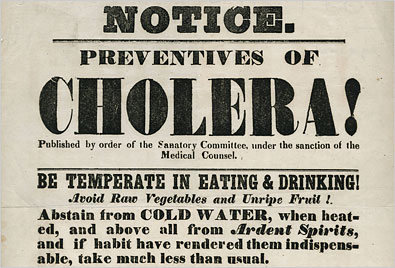
Wikipedia
Typhus
| Typhus is a group of diseases spread by infected fleas, lice, and berry bugs. The bactera attacks the lining of blood vessels and causes sever inflammation. This can lead to high fever, harsh headaches, body aches and a rash. In 1847, there was a mass Typhus epidemic. The Great Famine led to around a million people fleeing Ireland, most onboard disease-ridden “Coffin Ships”, called such because they were crowded, lacked food and water, and had death rates of 20-50%. Quarantine stations, like the one on Grosse Isle, were overwhelmed by typhus victims. They lacked accommodation and workers, meaning many were left without any care or shelter. It also meant ships couldn’t be screened properly and quarantine measures dropped, allowing the disease to spread further into Canada. Because of this, many people would die from extreme low blood pressue, organ failure, and delirium. Over 20,000 people died from Typhus between 1847 and 1848. |
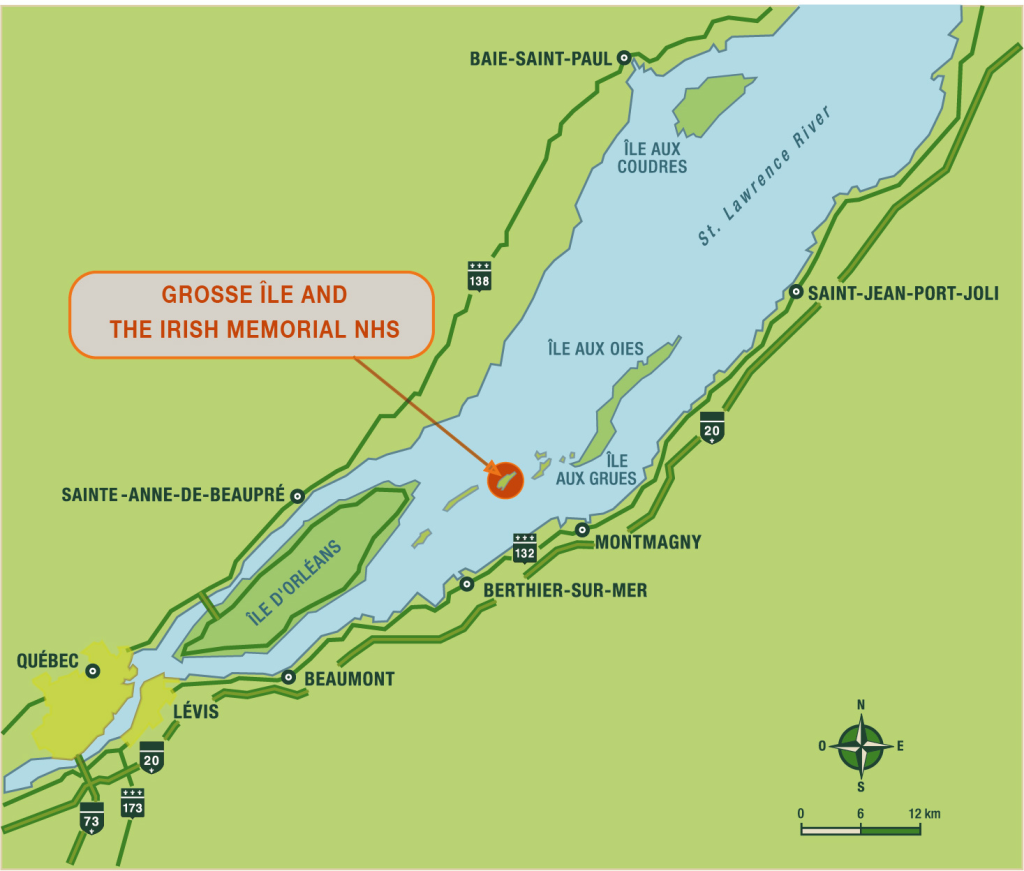
From Parks Canada, this shows there the Grosse Iland is located in the St. Lawrence River.
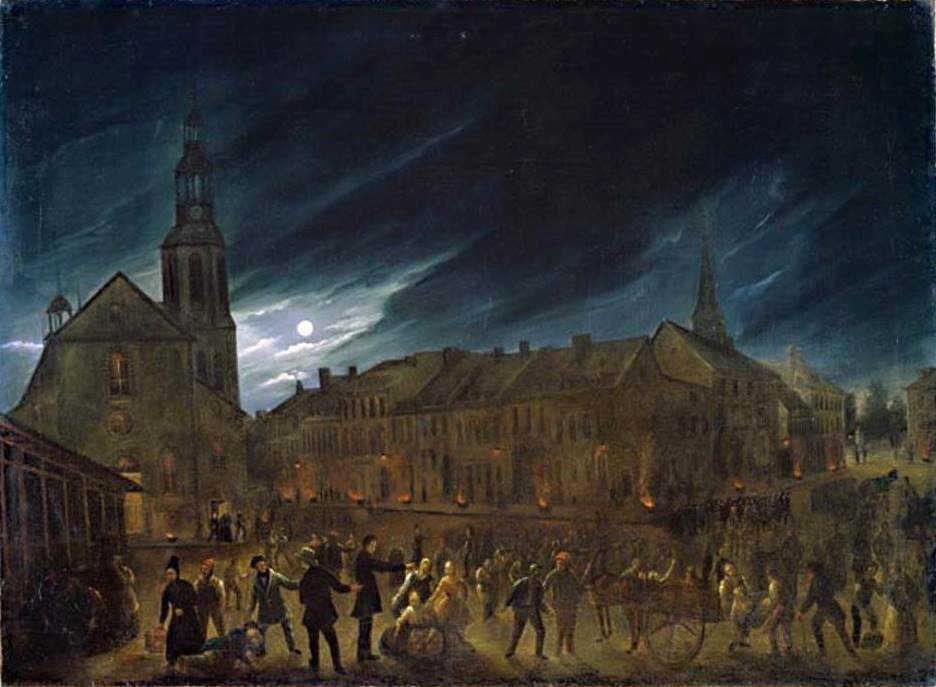
This painting depicts black smoke hanging over Quebec in 1832, as terrified citizens burn smudge pots to combat Cholera – The Canadian Encyclopedia
Measles
| Typhus never reached British Columbia; instead, it had a Measles epidemic. While Measles presents as a bad cold with a rash, it can attack the brain causing brain swelling, destroying imimmune memory cells (in essence, it destroyes your immune system), and even SSPE or Subacute Sclerosis Panencephalitis. While the last one is very rare, it causes the brain to swell so fast and it’s deadly. The Hudson Bay Company worked to increase trade and, in doing so, created highways for disease to spread along. Those that survive measles (or receive a measles vaccine today) have immunity, and if a high enough percentage of the population is immune, measles dies out, giving us herd immunity. Measles originated outside of the Americas, meaning while many immigrants had developed resistance to the disease, indigenous populations had none. Measles was just one Old World disease brought over to the Americas, which decimated indigenous populations. |
Spanish Flu
Caused by the virus H1N1, the Spanish Flue attacks the respiratory system, causing a fever, coughing, body aches and fatigue. It could also cause stomace issues in children, such as vomiting and diarrhea.
The Spanish Flu, or H1N1, has been misnamed. The epidemic started in 1918 when most of the world was embroiled in World War One. Spain wasn’t at war and didn’t censor H1N1’s existence, and so the disease was named after them. The flu was brought to Canada by returning troops and, unlike previous diseases, spread further as soldiers returned home with no quarantine measures in place. Canadian medical facilities were soon overtaxed and relied on volunteer infirmaries based in schools and hotels. Similar to COVID, attempts to halt the spread of the disease involved closing nonessential businesses, quarantine, and mask-wearing. As a response to the flu, the government established the federal Department of Health, making public health the responsibility of all levels of government.
1918 H1N1 caused sever lung damage, and could even cause severe oxygen deprivation. The worse case was hemorrhafing, with people having internal bleeding.
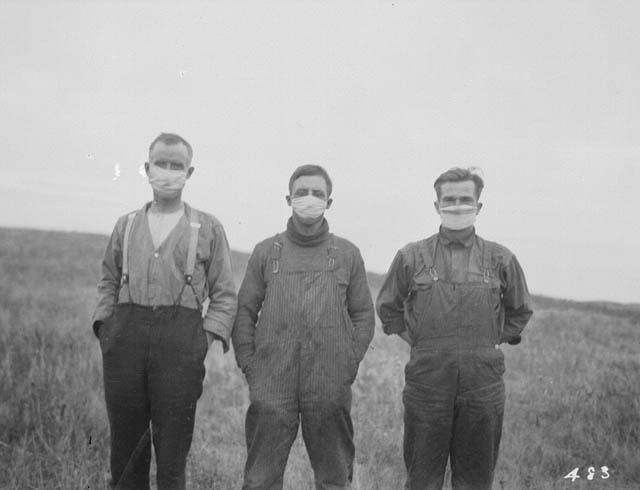
Canadian Farmers wearing Masks during the Spanish Flu