June – July 2006
As FIFA (International Association Football Federation) descend on Vancouver, Roedde House looks at four of our earliest Soccer/football players.
Soccer, or football, has a long history that spans the world, taking on the form of various ball games. There is evidence of these games being played in countries such as China, Japan, Peru, Mexico, Greece, and Italy.
In 1863, English football clubs standardized the varying sets of football rules and formed the Football Association in London, England. This was the start of the modern form of soccer/football. The “Laws of the Game” were later entrusted to the International Football Association Board (IFAB), before being adopted by the International Association Football Federation (FIFA).
The word “soccer” was originally slang in England for “Association Football”. It was officially seen in the 1863 rules of the game, to distinguish it from “Rugby Football”.
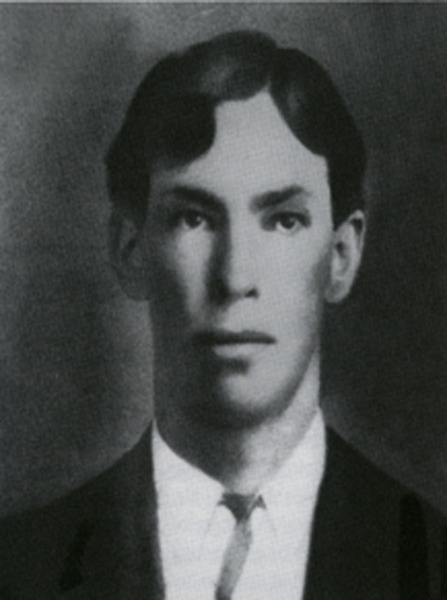
Xul-si-malt (Harry Manson) (1879 – 1912)
Xul-si-malt was the first Indigenous soccer player to be inducted into the Canadian Soccer Hall of Fame, and was inducted into Canada’s Sports Hall of Fame in 2015. He was the only player to play on all three premier soccer teams in Nanaimo. Xul-si-malt, a member of the Snuneymuzw Nation, was recruited by the Nanaimo Thistles in 1893 to play in the provincial championship. He was captain of an all-Sununeymuxw soccer team called the Indian Wanderers, which won the Nanaimo city championship in 1904. Xul-si-malt was recognized as one of the best players that Nanaimo had ever produced.
In 2015, the Harry Manson Legacy Tournament was created in his honor, with the hopes that it would overcome racial barriers that are still present in Vancouver.
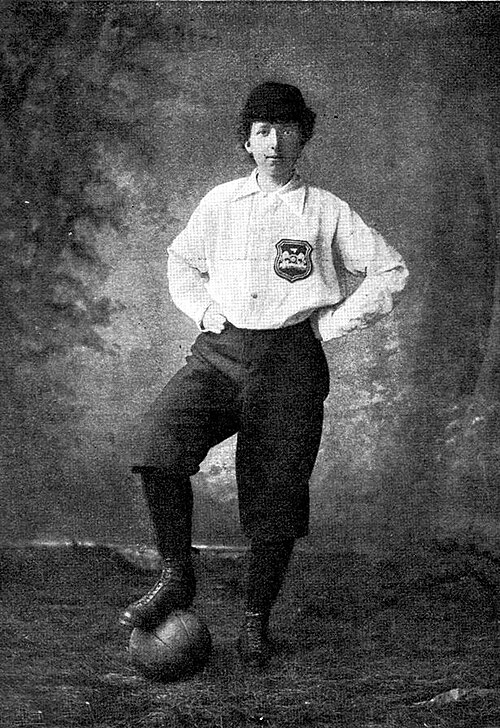
Helen Matthews (1871/72 – 1950)
Also known as Mrs. Graham, Helen Matthews was a Scottish footballer, artist, and suffragette. She is well-known for recruiting the first Black woman footballer, Emma Clarke. Her first appearance in a football match was probably in 1890, in Alec Payne’s football and entertainment tour of English and Welsh towns. Matthews went to London in 1895, and may have previously played in Birmingham for the short-lived Midland Ladies Football Club.
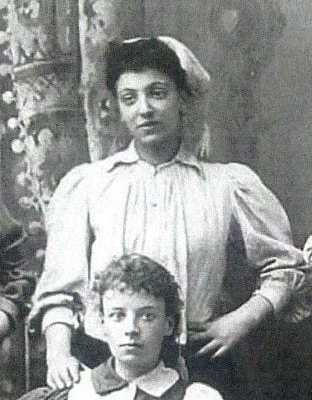
Emma Clarke (1876 – unknown).
Considered to be the first Black woman footballer in Britain, she played as a goalkeeper and right winger. Having worked as a candy maker trainee from the age of 15, Clarke received her formative sporting education playing the game in her neighbourhood streets. It was in those streets that she would meet Helen Graham Matthews (also known as Mrs. Graham). In 1895, Matthews recruited Clarke to play football for the British Ladies Football Club, an early all-women’s football club. In 1896, Clarke played for Mrs. Graham’s XI, selected as part of the team that would tour Scotland that year. In 1897, she made an appearance for “The New Woman and Ten of her Lady Friends” against “Elven Gentlement”. The women won 3-1.
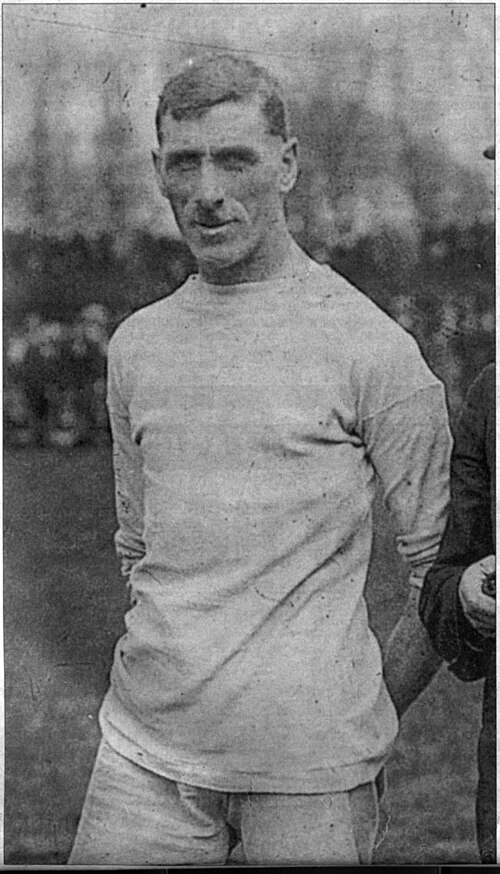
Billy Meredith (July 30, 1874 – April 19, 1958)
Billy Meredith was a Welsh footballer who was considered one of the early superstars of football. Known for chewing on a toothpick, he was notable for his time with Manchester City and Manchester United. Meredith won each domestic trophy in the English Football league and won two British home Championship titles. Meredith lost his position in 1905 to 1906 for bribing a player on the opposite team, and lost another four years of football due to World War I. He would help set up the Players Union, the forerunner of the Professional Footballers Association.