February 2026
It should be noted that the China Town today wasn’t officially formed until around 1885 and we didn’t have many Chinese Canadian Photographers or their works are lost. We at Roedde highly recommend going down to China Town and visiting the Story Telling Center or the Canadian Chinese Museum to learn more and immerse yourself in one of Vancouver’s oldest neighborhood
2026 is the year of the horse. People born in the year of the horse are said to be energetic, adventurous, and fierce. They make good leaders and thrive in lively settings.
The zodiac animal originated in China and has since been adopted by many Asian countries who have made their own changes. The Chinese zodiac is on a 12 year cycle: rat, ox, tiger, rabbit, dragon, snake, horse, goat, monkey, rooster, dog, pig. The order of the zodiac was decided by a race held by the Jade Emperor, one of the highest gods in Chinese religion.
This year, we decided to focus on three countries: China, Japan and Korea
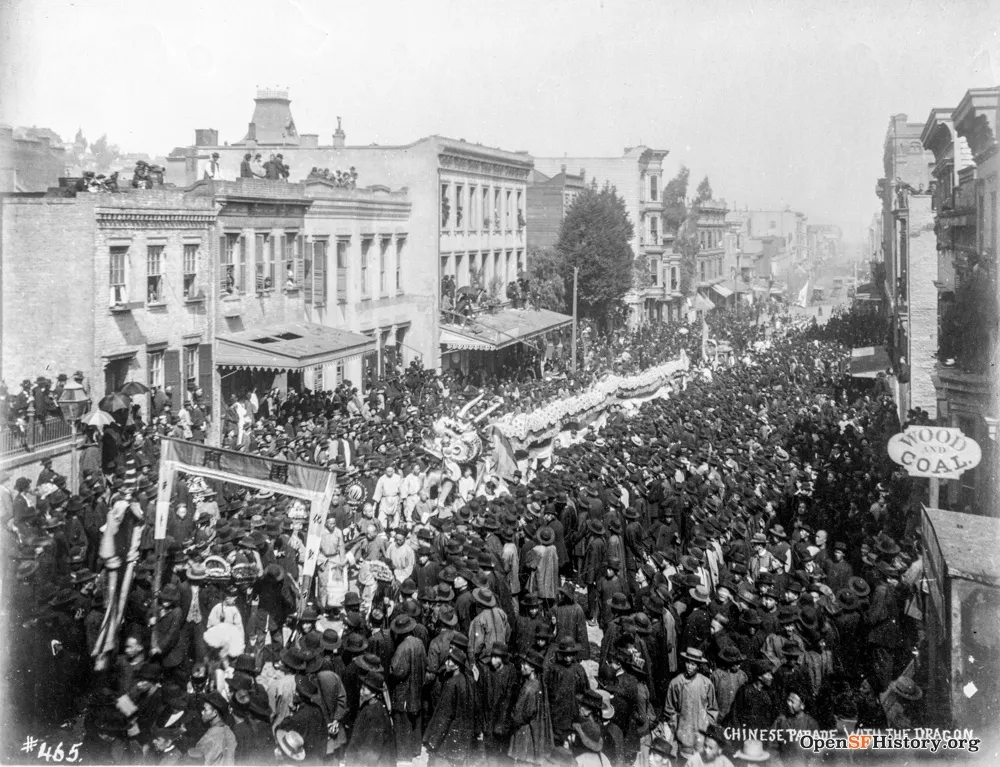
A New Year’s parade, with the dragon at the center, proceeds down Stockton Street, c. 1882. (OpenSFHistory)
China
Chinese Lunar New Year or Spring Festival is 15 days long and ends with the Lantern Festival. Celebrations include lion and dragon dances, fireworks, and lots and lots of red. This is because there was said to be a great monster called Nian who would come each year and terrorize the people. One year a man was able to scare him off with red and loud noises and so people continue to do so.
Older generations will give red envelopes (hong bao) with money to the younger generations. This practice started in the Han dynasty where coins would be engraved with auspicious words and gifted to children to protect them from evil spirits.
Japan
apan no longer officially celebrates Lunar New Year. They switched to using the Gregorian calendar in 1873 and have celebrated on January 1st since then. However, Lunar New Year is still celebrated in Okinawa and in many rural areas. The solar New Year celebrations are based on the lunar ones. People will send New Years postcards or Nenga to loved ones and these are timed to arrive on New Year’s day. Adults will give New Year money (Otoshidama) in colorful envelopes to children. At the start of the year people will visit temples or shrines to make wishes for the coming year.
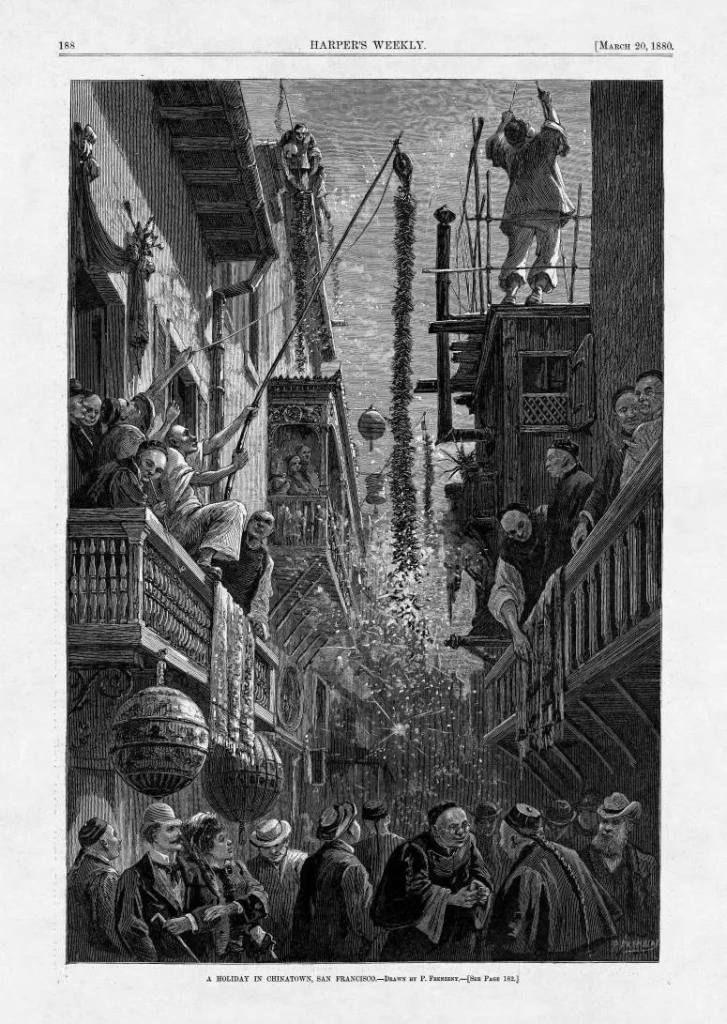
woodcarving depicts New Year’s in San Francisco’s Chinatown, 1880. (Paul Frenzeny, Harper’s Weekly)
Korea
The Korean Lunar New Year is called Seollal. It means “year of age” since the traditional age system in Korea meant everyone aged at the start of the year instead of a birthday. This system was officially phased out in 2023. People often travel to spend time with their family. Sebae (세배) is a deep bow performed by younger family members to older ones and may be accompanied by wishes for good luck. The elder will often respond by gifting Sebaet Don (new years money) in silk bags. People will wear new clothes or hanbok (traditional Korean clothing), play games, and eat meals together. Certain foods are eaten for their auspicious meanings such as Tteokguk which looks similar to traditional Korean money.
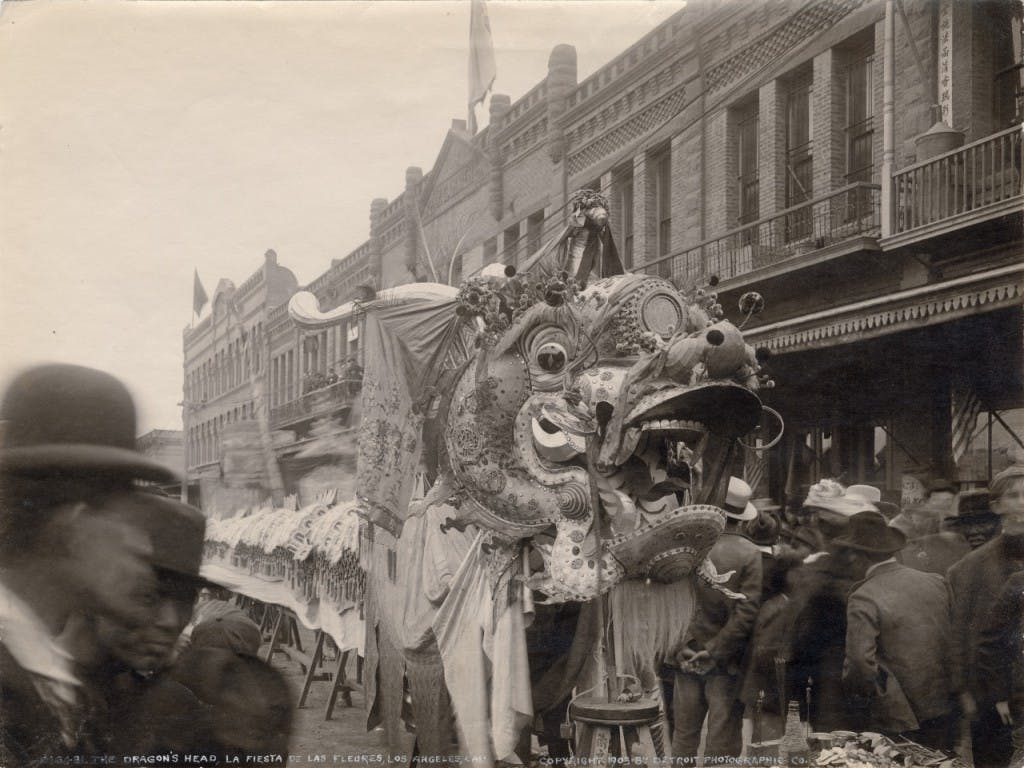
The Dragon’s Head, La Fiesta, Los Angeles, California, 1903. Courtesy of the California History Room, California State Library, Sacramento, California.