March and April 2026
Known for “Art for Art’s Sake”, Aestheticism was a late 19th-century art and design movement that believed that the value of art was purely in its beauty, rather than in any moral or functional uses. Heavily inspired by East Asian art, Aestheticism used many motifs, such as sunflowers and blue china. The movement caused controversy, seen as a decay of morals and leading to decadence.
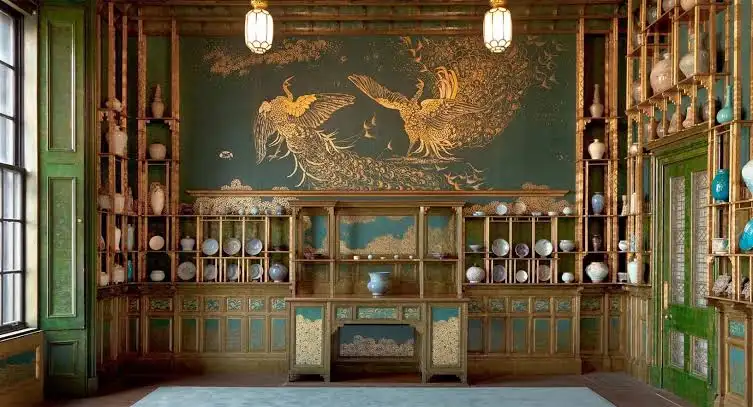
Image from the Smithsonian National Museum of Asian Art, https://asia.si.edu/explore-art-culture/interactives/peacock-room/
An example of Aestheticism can be seen in the picture above, the Peacock Room.
While Aestheticism impacted fashion and art, its biggest contribution was in interior design. The Victorian trend for interior design was that of extreme maximalism. Collecting large amounts of trinkets to fill their rooms as a sign of wealth. Aesthetes (those who follow Aestheticism) preferred having high-quality and beautiful objects that were in harmony with each other. Wallpaper also played an important role within the movement, paired with wood wainscotting. There’s an example of this right in the Roedde house dining room!
In the world of fashion, Aesthetes favoured loose, flowing, and free dress for women. This was considered highly controversial against Victorian structured and formal dress.
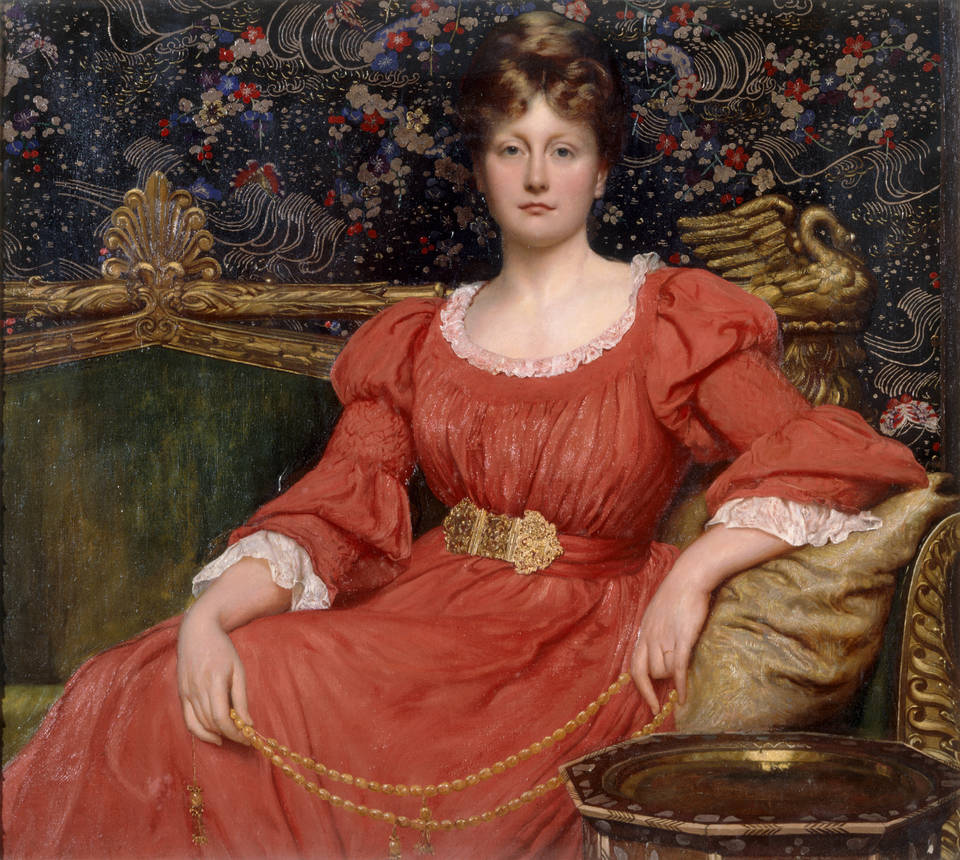
Image provided from V&A, https://collections.vam.ac.uk/item/O84113/mrs-luke-ionides-1848-1929-oil-painting-richmond-william-blake/
This is a portrait of Mrs. Luke Ionides, painted by William Blake Richmond in 1882. She’s wearing a loose and flowing dress that was favoured in the Aestheticism movement.
A famous example of someone embodying the Aestheticism movement was Oscar Wilde (1854-1900). He became interested in the movement while he was in university. Outside of his writing, he delivered lectures on the principles of Aetheticism in the United States and Canada. He was a polarizing figure and defined Aestheticism for much of the public, dividing opinion, who saw him as either a brilliant lover of beauty or a pretentious and dangerously immoral man.
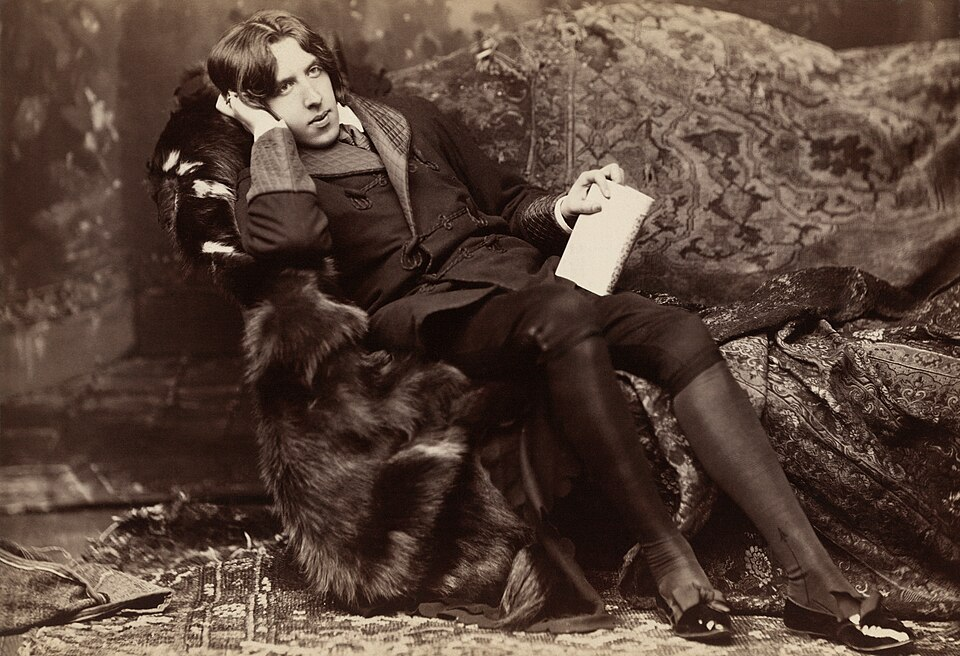
Photo of Oscar Wilde, called the “Prince of Aesthetes”. Image from https://en.wikipedia.org/wiki/Oscar_Wilde#/media/File:A_Wilde_time_3.jpg